
-
Takondwa Mazengera
-
Joanne Bloch
-

Unseen: Listening to visually impaired South Africans

Living in an “obsessively visual culture” – Takondwa Mazengera interviews Joanne Bloch
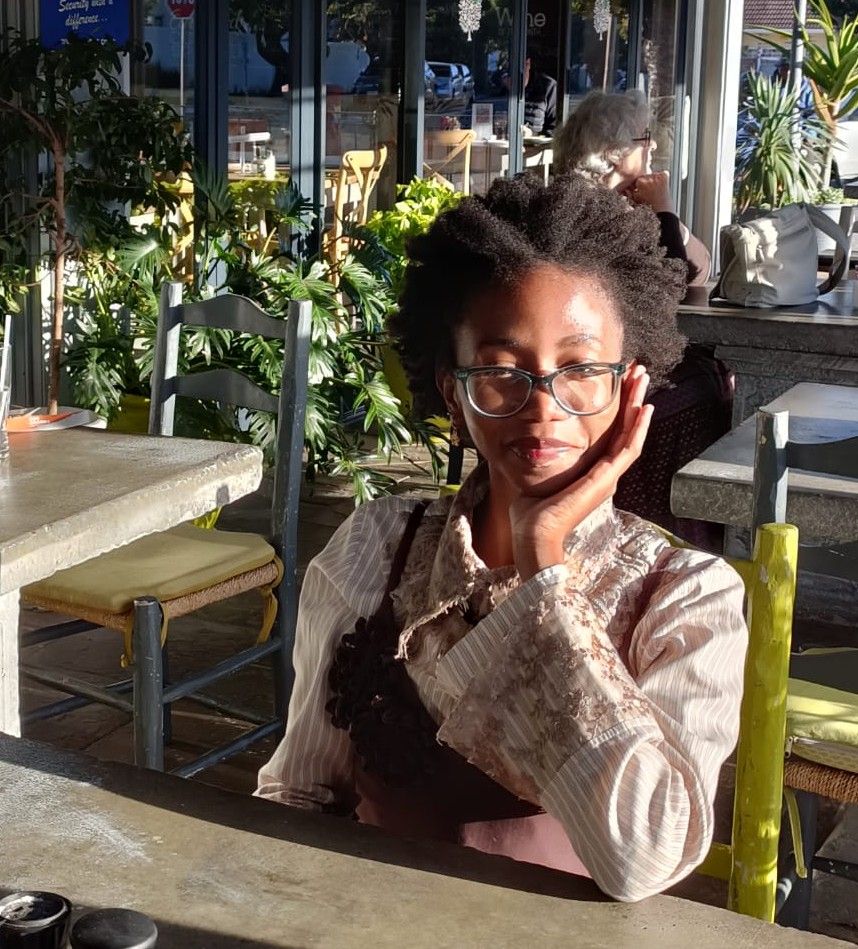
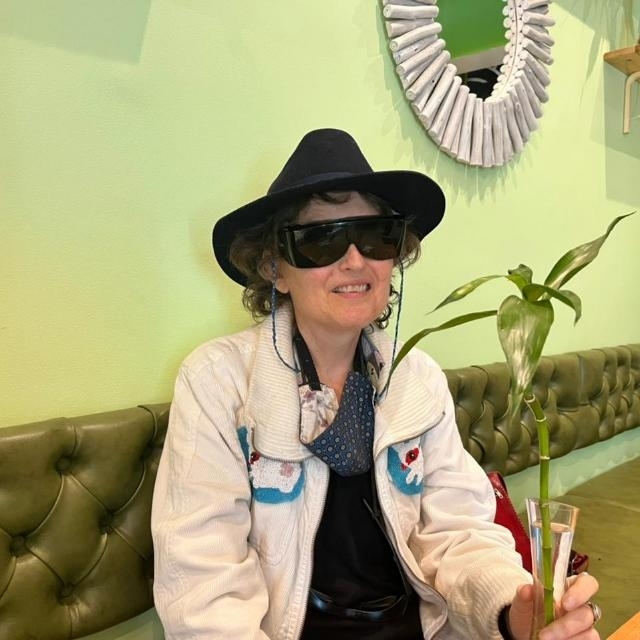
Joanne Bloch is a South African artist, writer, and author of the book Unseen: Listening to visually impaired South Africans, a book that chronicles Bloch’s and 20 contributors’ experiences with navigating visual impairments in a society that is built for the seeing. Unseen is a powerful reminder to listen to and internalise the voices of visually impaired people about their outlook on the healthcare system, ableist language and societal norms, and their life experiences. Takondwa Mazengera (UCT intern from Varsity News UCT) interviewed Joanne Bloch to further inquire about inclusivity, living with a visual impairment in South Africa, and much more.
TM: One of the participants, Soeraya, detailed how healthcare professionals handled their condition with a binary lens of seeing or blindness. How does the binary of sight and blindness contribute to the negative perceptions and misinformation around blindness?
JB: If people have that kind of idea, they won’t understand that there is a vast range in between unproblematic vision and blindness, so they’ll tend to lump everyone together in one category. They won’t understand that partially sighted people have different ways of doing things from people who are totally blind, that they need to respect.
For example, there are different technologies that suit different people depending on their level of sight. I am partially sighted. I can use a computer, but the computer setup that someone else might be comfortable with is completely wrong for me, as I am affected by bright lights. When you don’t understand that sight is a spectrum, you miss out on all the subtleties of visual impairment.
TM: Why do you think people are not informed about the vastness of sight?
JB: There’s a widespread reluctance to engage with disability generally. People find it uncomfortable, so they avoid it, which doesn’t foster understanding and, in fact promotes misunderstandings. As far as sight is concerned, there are many peculiar and often discriminatory ideas passed down through the ages that are constantly recycled in the media and in society generally. One of them is this binary, where blindness is understood as the only other option to sight.
TM: Social media users often use stylised fonts to customise their pages, but these fonts are often illegible on text-to-speech programs. Is there a way for these stylised texts to be translated in a way that gives the visually impaired reader the feel of the original ‘feel’ of the text?
JB: I’m not sure if there is a way of translating the fonts so that they retain the intended feel. I suppose some imagination is required!
For me, the plainest sans-serif fonts with generous space between the lines are the most readable. But in my experience, listening is much more comfortable, even though I can read a bit. Audio is much more accessible to visually impaired people. Personally, I really like it online when audio is available, but that isn’t always the case—one can’t get past the fact that we live in an obsessively visual culture.
TM: Unseen is set in Verdana Pro and Museo Slab fonts to make it easier for people with visual impairments to read. What are some improvements you think can be made for higher education to be more accessible to those with visual impairments?
JB: Every person with a visual impairment is different, so universities need to accommodate each student individually. When I was doing my PhD, for example, I was in these seminars, and they would hand out packs of seminar papers which were much too small for me, so they printed them out in larger sizes. Someone had to read them to me, but I could still reference them with ease. When I was at the University of Cape Town, the disability unit would scan books so I could access them on my computer and blow them up in size. At that stage I could manage that; I couldn’t manage that now.
There is a whole raft of possible solutions, but they aren’t going to come about if visually impaired students are not consulted. Some solutions might be quite simple. For example, some students might benefit from having a guaranteed seat in the front of the classroom.
TM: You mention how the surgeon who conducted your first surgery only spoke to you once. Can you tell us more about your experiences as a woman seeking healthcare?
JB: At that stage, I was a teenager, so maybe it’s not that surprising.
I don’t think it is only my experience that doctors don’t speak to their patients as intelligent people who live in their own bodies. As an adult, I have often found that certain doctors expect one to be very meek and take their word without asking any questions. So, they can come across as patronising, cold, and insensitive when sometimes they have to deliver an upsetting diagnosis, which my interviews showed very clearly, but I must emphasise this is not all doctors, and there are some amazing doctors out there.
TM: Can you expand on how the phenomenon of the “supercrips” erases everyday disabled people?
JB: If one only considers those who “shine”, people who have done extraordinary things in their lives, it erases the achievements and success stories that many people have with their lives in a less extraordinary way. A lot of disabled people do very well despite having great disadvantages, not only from their disabilities but from other intersecting factors, like poverty, illness, or living in an under-resourced area, but they tend to be ignored to focus on the celebrities.
TM: Visual impairments can arise at any age. What are some changes you believe we can make in society that would make it easier for someone who develops a visual impairment so their lifestyle shift isn’t so big?
JB: Well, I think it is always going to be an adjustment, but you’re right, it could be a lot easier. In the ideal society, we could imagine everything would be much more accessible, as far as buildings, urban environments, websites, and overall creating alternatives on many different fronts that are inclusive to people with visual impairments. That is one aspect of it, but it costs money, so these accommodations are scarce.
A huge difference could be made if people’s attitudes changed and if the culture was more accepting of disability, and we get rid of these myths and stereotypes that condemn people to be constantly misunderstood and discriminated against. That would even start with language. These days, discriminatory language in terms of racism and sexism is not acceptable, but when it comes to language referring to blindness and other disabilities, it’s a free-for-all. Discriminatory and often hurtful expressions are just embedded in the language we speak, and they also contribute to continuing stigma.
In addition, there are all these stereotypes that need to be undone. “The blind” are seen as passive, tragic victims of bad luck. This kind of nonsense denies people the right to be individuals living meaningful lives. What we really need is a change in attitude across the culture, and for this to happen, we need to start with educating the public.
Conclusion
Overall, after reading Unseen and meeting with Bloch, I believe it is imperative for us as a society to confront the language we use, the infrastructure we construct, and the media we consume that perpetuate outdated and negative ideas about visually impaired people. And this process of deconstructing harmful social norms can only begin if we start listening to the voices of visually impaired South Africans.